Showing posts with label Society. Show all posts

Monday, 19 January 2015

Uniting people, fighting obscurantism

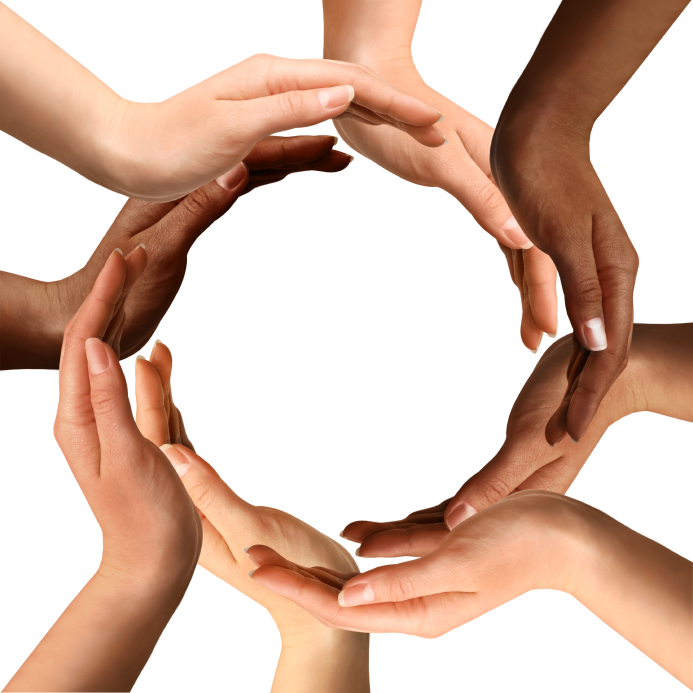
Hands
The defence of basic human rights has gathered, in response to an horrendous terrorism act, millions of people in French streets and in the world in an unprecedented unison. It was both moving and reassuring to see when big causes are at stake people get united.
Altruistic endeavours, although to a lesser extent, can also unit people and bring them together, all involved in a common enterprise regardless of their country, race, religion or culture. Such ventures aren't so many: humanitarian aids, fighting hunger and poverty, providing universal education and, probably, expanding knowledge.

Knowledge of the most fundamental mechanisms related to life, to the environment and to the universe is certainly the most important asset of humanity. It is a common heritage that has been accumulated since the dusk of civilization, a growing treasure passed from generation to generation. Pure knowledge is the seed of disruptive civilization changes often for the better and sometime for the worst. It all relies on people i.e. political decisions. But pure knowledge is a marker of humanity evolution.

Human beings are social animals and research is a social endeavour. Planned future fundamental research projects definitely adopt and develop this social and encompassing dimension pushing it from the regional to the world level. They must get people from all horizons united behind the same goal.  It is much more than technology or complex mathematics, it is creative thinking in a multicultural society.

Without distorting the original message given by these demonstrations, let's hope that more value will be put on culture and science to help fighting hatred, xenophobia and obscurantism.


and Pencils.

Monday, 11 June 2012

Pour une "Recherche Normale"

http://curie.fr/sites/default/files/hommage-f-hollande-marie-curie15mai2012.jpg

Une recherche normale ? Quoi ! Mais la recherche c’est tout sauf la normalité, c’est la passion, l’imagination, la plongée dans l’inconnu, le refus du statu quo, la prise de risques. On ne programme pas les découvertes. Il n’y a pas de cahier des charges pour changer la société.
En 1900, Robert Portes, le chef de projet de la compagnie Mendeleïev-Stoney (MS) finissait ainsi la réunion de travail hebdomadaire :

« Bon alors résumons nous, d’abord on découvre l’électron, puis on en fait la théorie, oui mais, faut faire simple, hein!, on résume ça en deux formules, pas plus !, ensuite on les injecte dans des transistors, Oui parce que, avec des lampes, on n’ira pas loin, bon ! Finalement on miniaturise tout ca et on met un ordinateur dans chaque foyer !!!! Ouah, trop cool !!! Bon, aller, au travail … Ah j’oubliai, on demande aussi au CERN d’inventer le WEB… Oouai ca pourrait aider !!»

La recherche pour améliorer la société ? Ha oui ! Et elle le fait, mais la bombe atomique, apothéose de tous les progrès scientifiques appliqués à l’ « Art Militaire » au cours des temps, les dommages irréparables fait à la terre, notre seul esquif dans l’Univers, par le cycle du pétrole, le manque de maitrise de l’énergie nucléaire, la déforestation massive, l’élevage intensif, la pèche industrielle, ca aussi c’est la recherche ! ou son trop peu ?

La recherche et l’innovation pour sauver l’économie ? Ah ca, on l’a entendu durant la campagne présidentielle: « la recherche et l’innovation pour la croissance, pour sortir de la crise » !!! Bien sur, c’est une solution qui marche: créer des besoins, pour les satisfaire ensuite, mais l’effet sur l’emploi ? Les ordinateurs qui ont détruit des millions de jobs dans le monde., les postes de dactylo… de quoi ? Ah, si, celles qui tapaient sur des « machine à écrire », sur quoi ?… bon.. laisse tomber…, de postes de comptable remplacés par les feuilles Excel, les robots industriels à la place des ouvriers, la rapidité et la facilité des transports bases du profit des délocalisations…. La liste est longue …

Alors quoi ! … la recherche c’est quoi ? C’est pourquoi, ? La recherche est-elle mauvaise, finalement ? Qui veut encore de la recherche ?
Mais tout le monde !  Elle n’est ni bonne ni mauvaise, elle est, simplement, ce qu’on en fait. Le désir de connaissance est ancré dans le cerveau, la recherche est le propre de l’homme. Il n’existe, ne se réalise que dans sa vision du futur, le présent est trop court, le passé trop tard. Et cette vision du futur c’est quoi ? plus de confort pour les riches, plus de pain pour les pauvres, plus d’égalité, plus de respect, plus d’harmonie pour tous … peut-être … peut-être la recherche y contribuera-t-elle, nul ne le sait. Les applications seront-elles pour un futur radieux ou pour l’apocalypse ? Ça dépend de la société, de l’éducation, de l’information et de nos moyens, nous citoyens, d’influer sur la politique et l’économie, pas de la recherche seule. Mais sans elle, il n’y aura rien a decider.

Alors, alors devant l’inconnu, devant l’incapacité à prévoir ce qui ne peut l’être !, que faire ? …Simplement, une recherche normale c.à.d. une recherche qui reçoit des financements récurrents suffisants, un recrutement de qualité sans à-coup, une recherche sans priorités tonitruantes, mais une recherche ouverte et coopérative, une recherche respectée et communicante, une recherche internationale,  lieu de toutes les diversités du savoir, avec des grands équipements, quand ils sont nécessaires, une recherche ambitieuse de la seule soif de connaissance. Un peu comme ca se passait avant, avant sa trop grande instrumentalisation, avant, quand le CNRS a été créé, par exemple,  par des visionnaires comme Fréderic Joliot-Curie au sortir de la guerre, une recherche comme dans « La recherche passionnément » écrit par son fils Pierre Joliot (à gauche de F. Hollande sur la photo) présenté à notre Président normal le jour même de son investiture, Une recherche qui malgré nos espoirs, nos besoins, nos aspirations laisse le temps au temps, car c’est lui qui décide.

Une recherche normale, c’est, aussi, une recherche indépendante, libre et publique et qui en rend compte à la société. Une recherche qui est un recours quand les abus et les excès des uns, les croyances et les mystifications des autres jouent avec la naïveté du peuple. Les chercheurs ne sont pas dans une tour d’ivoire, ils sont au cœur même de la société, là, oui là, dans le métro à coté de vous, au feu rouge dans sa Twingo. Ils sont comme nous, normaux, ils sont les premiers à vouloir valoriser leurs travaux et, en cela, ils sont à la source de l’essentiel de l’innovation industrielle. Ils sont comme nous, sauf quand, au détour d’une question, comme dans « Transformers 4», ils se transfigurent, vous communiquent un peu de la passion qui les anime et vous emmène dans le monde fantastique du savoir et de l’espoir.


Tuesday, 14 June 2011

Fukushima: Scientists and Society

A revised version of a "Sciences et Avenir" column (in French)
"A new Science order: Science for the people"  

GE Fukushima reac
Nuclear energy, oil supply, shale gas extraction, climate change, nanotechnology, cell phone radiation, drug safety, GMOs, food poisoning and even financial products, are some of the subjects, highly topical and of strong technical imprint, that have invaded our daily concerns. They disrupt the whole economy and transform in depth the society. But what control over these new technologies can the society exercise? Which means and opposition forces may the society put in action? Faut-il imaginer une nouvelle organisation de nos démocraties pour valoriser l'avance des connaissances en respectant les citoyens et en sauvegardant le futur de l'humanité? Should a new organization of our democracies be designed to promote the new discovery applications yet preserving citizen freedom and expectations and safeguarding the future of humanity?Quel doit être le rôle des scientifiques, entre savoir et pouvoir, science et conscience, profit et pr What should be the role of scientists in this framework, between knowledge and power, science and conscience, profit and progress? 
The Fukushima Dai-Ichi tragedy should encourage this realization so that scientists, politicians, industry leaders and citizens engage in a sincere discussion and design the prospects for a safer, healthier and more serene world.
La tragédie de Fukushima, au delà du souci immédiat d'éviter le pire et de protéger les travailleurs et la population du danger effroyable d'un deuxième Hiroshima-Nagasaki [1] , ne doit pas rester sans suite. The Fukushima tragedy, beyond immediate concerns to avoid the worst and protect nuclear-power workers and the people of the terrible danger of a second Hiroshima-Nagasaki [1], must not remain unanswered. Everybody agrees and topics to address are numerous: need for nuclear energy, reliability of the technologies, hazardous industry governance, prevention and crisis management, etc. Cependant, dépassant largement le nucléaire, il faut aborder le sujet central à l'ensemble de ces questionnements, celui du rôle de la science et des scientifiques dans la société et des contrôles et protections qui doivent être mis en plaHowever, far beyond the nuclear energy issue itself, one needs to address a central theme common to all new technologies reaching the society, namely: what is the role of science and of scientists in society and what are the checks and safeguards that must be implemented together with the implementation of new technologies or new processes.
De nombreuses voix de scientifiques s'étaient élevées contre les risques nucléaires dans un pays qui recense 40% des tremblements de terre du monde. Many scientists had raised serious concerns about the nuclear danger in a country that registers 40% of the world earthquakes. Elles n'ont pas été écThey were not listened to.Dans une région qui avait connu en 1896 un tsunami de 38,2 mètres, était-il raisonnable, était-il « scientifiquement correct », de construire la centrale de Fukushima Daiichi au bord de l'océan? In a region that had experienced in 1896 a tsunami  with waves up to 38.2 meters, was it reasonable, was it "scientifically sensible" to build a power plant on the oceanfront? N'était-il pas criminel de « soudoyer » et de tromper la population locale pour faire accepter, à sa porte, des réacteurs simplement protégés par des digues de 5,7Was it not criminal to "bribe" and deceive local people to accept, on their doorstep, nuclear reactors only protected by 5.7 m dikes? Qui prit ces décisions ? Who took these decisions? obviously the decision makers:Ceux dont c'est le rôle, le gouvernement et les industriels, certainement pas les scientifiques. the government, the industry ?, certainly not scientists. Because simply they were not really involved.
'Tremblement de terre nucléaire" Nuclear Earthquake
En 2006, la sécurité des centrales avait été réévaluée par une commission nommée par le gouvernement. In 2006, the nuclear plant safety had been reviewed by a commission appointed by the government. Devant l'augmentation des risques sismiques depuis leur construction, un de ses membres, Katsuhiko Ishibashi, professeur à l'Université de Kobe, avait demandé des mesures complémentaires pour donner un avis circonstancié. Given the increased seismic risk since the reactor construction, one of its members, Katsuhiko Ishibashi, a professor at Kobe University, had asked for additional  studies to give a serious and detailed opinion. Sa demande ayant été refusée, sa seule arme fut de démissionner de cette commission qu'il qualifia de « manipulée et non scientifique » et rien ne vint s'opposer à la volonté du gouvernement et des opérateurs de poursuivre sans modification l'exploitation des centrales. His request was denied, the only way to express himself was to resign from a commission he described as "manipulated and unscientific" and nothing came to oppose the will of the decision makers to continue, without modification, the plant operations. Il avait pourtant décrit avec précision l'enchaînement fatal qui fut observé: tremblement de terre, tsunami, accident nucléaire et avait même inventé le terme de « tremblement de terre nucléaire » (genpatsu-shinsai) pour cet effet domino. Yet he had accurately described the fatal sequence which was observed a few years later, on 11th March  2011: a big earthquake followed by a tsunami triggering then a nuclear accident. He had even coined the term "nuclear earthquake” (Genpatsu-Shinsai) for this domino effect.
Le scientifique a dit la vérité … "The scientist told the truth, he should be executed…" [2] Ce cas n'est pas unique, dans beaucoup de domaines et singulièrement dans ceux liés aux avancées scientifiques, il ya eu des lanceurs d'alerte («whistleblower », souffleur de sifflet, disent littéralement les anglo-saxons).
This case is not unique. In many areas and particularly in those related to scientific advances, there have been whistle blowers. Mais, que peut un seul expert quand d'énormes intérêts sont en jeu? But what can one expert do when huge interests are at stake? Les puissants lobbies partisans, religieux ou industriels auront tôt fait de rendre inaudible ce gêneur. The powerful activist, religious or industrial lobbies will quickly make this intruder voice-less. Ils en ont les moyens.They can afford it. Discrédité, son avenir professionnel sera compromis, ses moyens réduits et il ne pourra plus porter la contradiction.Discredited, his professional future will be compromised, his support will be drastically reduced and, therefore, he will no longer be able to bear the contradiction.
S'il « survit », si un comité de scientifiques se forme, si des pétitions sont signées, alors un groupe contradictoire de pseudo-experts sera créé. If he "survives", if a committee of scientists is formed, if petitions are signed, then an adversarial group of pseudo-experts will be created. Fortement financé, il jettera le doute dans l'esprit du public libérant ainsi les politiques des contraintes que la science imposait. Heavily financed, it will cast doubt [3] in the public awareness freeing the politics and decision makers of the constraints that science imposes. Certains media joueront le jeu biaisé de la soi-disant polémique en organisant un débat entre deux représentants de chaque « camp », accréditant ainsi d'avantage l'idée que « les scientifiques sont partagés sur le sujet ». Some media will play the biased game of artificial controversy by hosting debates between an equal number of representatives of each side, further supporting the idea that "scientists are divided on the subject". Ils s'appuieront sur des figures médiatiques qui n'ont de scientifique que leur titre acquis dans leur prime jeunesse, mais certainement ni les connaissances, ni les méthodes, ni la rigueur. They will rely on science media figures, not necessarily expert on the specific issue, but who nevertheless express themselves without neither the scientific methods nor the rigor they should have exercised. C'est ce schéma que l'on a vu se développer dans le combat entre darwinisme et créationnisme, autour du réchauffement global, sur les OGM, la téléphonie mobile, … It is this very pattern that we saw being developed in the battle between Darwinism and creationism, about global warming, GMO safety or mobile phones radiations, ...
Mais après tout, pourquoi s'alarmer, disent certains ? But after all, why be alarmed, some says? L'humanité n'at-elle pas évolué, de la préhistoire à l'ère numérique, comme un bolide fou entre indéniables progrès et nouveaux moyens de destructions, constatent-ils. Has’nt Mankind evolved from prehistoric times to the digital age, like a meteor between undeniable progresses and new means of destruction.Finalement, selon eux, tout n'est pas si terrible, l'humanité ne s'en est pas trop mal tirée … des Tchernobyls, des Fukushimas, il y en a eu et il y en aura d'autres, c'est encore supportable. Finally, they say, all is not so horrendous, humanity did not do too badly ... like Chernobyls or Fukushimas, there have been and there will be others, it is still bearable. C'est dommage pour les populations, mais voyez-vous ! It's a problem for people living there, but you see, il n'ya pas d'alternative, sans énergie pas de croissance, sans croissance point de salut. there is no alternative, no growth without energy, without growth, no salvation!
C'est cynique, injurieux même pour les victimes, mais c'est l'état d'esprit de certains, si l'on en juge par les déclarations de représentants de l'IAEA [2] , organisme sensé contrôler l'utilisation pacifique du nucléaire. It is cynical, even insulting to the victims, but this is the mindset of some, at least if we judge by the statements of representatives of the IAEA [4] , an organization supposed to control the peaceful use nuclear technology.
Ou bien sommes-nous arrivés à un point de rupture , une singularité disent les scientifiques, un point de non retour, un point où la puissance de l'homme et de son savoir peut détruire la planète, un point ou les risques mal maitrisés dépassent largement les bénéfices attendus? Or, have we come to a breaking point, scientists say a singularity, a point of no return, a point where the power of man and his knowledge can destroy the planet, a point where poorly controlled risks largely exceed the expected benefits?
En fait, ce point nous l'avons déjà dépassé depuis que l'armement nucléaire existe. In fact, this stage we have already passed since the nuclear armament exists. Car avec la dissuasion nucléaire, il s'agissait bien de promettre l'apocalypse à toute velléité de domination, la destruction de la planète comme règlement des conflits. As with nuclear deterrence, Apocalypse is promised to any attempts of domination, the destruction of the planet as a recipe for conflict resolution. L'humanité est passée près, très près de sa disparition, une simple erreur humaine, une provocation, un manque de sang-froid d'un de nos dirigeants et le pas pouvait être franchi. Humanity has come close, very close to its disappearance, a simple human error, a provocation, a lack of composure of one of our leaders and the step could have been crossed.
Alors que faut-il faire ? Knowledge is power to choose
Arrêter la recherche, disent d'autres ! Stop research! say others. Finalement, ne serait-ce pas là la solution puisqu'elle peut nous embarquer vers d'autres périls, encore plus grands que ceux que l'on connaît ? Finally would this not be the solution, since research can embark us to other and unforeseen dangers, even greater than what we know? Il faudrait nous contenter d'améliorer ce que l'on connaît et corriger les « petits » défauts de nos technologies, soutiennent-ils. We should just improve what we have today! and correct the "small" defects of our technologies, they argue. C'est ce qu'on aurait pu être tenté de faire, il ya un siècle, en continuant à développer la chandelle alors qu'on découvrait l'électron et l'électricité. This is what we might have been tempted to do a century ago, namely continuing to develop the candle technology when J.J. Thomson and others were discovering the electron and electricity. Si par faiblesse on s'engageait dans cette voie, un nouveau siècle d'obscurantisme s'ouvrirait, un retour en arrière fatal serait amorcé qui ne ferait que rendre la situation actuelle encore plus difficile à relever. If society had this weakness, a new century of darkness would open, a fatal step backwards would be initiated which would make the current situation definitively even more difficult to overcome.C'est en fait de plus de recherche dont on a besoin, d'une meilleure connaissance des risques et des possibles implications. What we need actually is not less but more research. We need a better understanding of the risks and of all possible consequences. We need finding new solutions to old problems or alternative technologies. Savoir c'est pouvoir choisir. Knowledge is power to choose.
Alors, que faire ?So what? Comment éviter ce retour en arrière et son cortège de croyances obscurantistes et l'explosion incontrôlée d'un savoir dévoyé ? How to avoid going backwards with its procession of obscurantist beliefs but still staying away from the uncontrolled explosion of misguided new knowledge applications? Comment bannir les applications néfastes et promouvoir celles qui font progresser l'humanité vers plus de sécurité, plus d'égalité, plus de confort pour tous ? How to banish harmful applications and promote those leading humanity toward greater security, more equality and more comfort for all? C'est une question récurrente, mais nous, scientifiques, seuls n'avons pas la réponse; elle réside d'abord dans une prise de conscience de la société dans son ensemble , une société qui actuellement confine le scientifique dans une tour d'ivoire et ne voit en lui, au mieux, qu'un découvreur de possibles, qu'un accumulateur de connaissances, qu'un « agitateur d'idées ». This is a recurring question since ages which has never been solved properly, because we scientists, alone, have not the answer. It lies primarily in raising the awareness of society as a whole, a society that currently confines the scientist in its ivory tower and sees him, at best, as a discoverer of possibles, as an accumulator of knowledge or as an intellectual agitator.
Si la société au cours de son histoire a évolué vers plus de démocratie, plus d'implication du peuple dans les grands choix politiques, elle ne s'est pas dotée de véritables instruments d'évaluation, de contrôle et d'information adaptés à l'évolution des connaissances. If the society during its recent history has moved towards greater democracy, greater people involvement in the major policy choices, it did not adopt adequate instruments of assessment, of control and of nformation dissemination tailored to the rapid evolution of knowledge. Entre la recherche et ses applications, entre les stratégies politico-industrielles, nationales ou supranationales et les besoins réels de la société, en un mot, entre la science et la société, un chaînon est resté manquant, celui d'un jugement scientifique des risques et des bénéfices des nouvelles technologies et d'un contrôle permanent de leur mise en œuvre. Between research and application, between political and industrial strategies (national or supranational) and the real needs of the society, in short, between science and society, remains a missing link: the evaluation of the new technologies risk/benefit values and the constant monitoring of their implementation. Pire, la nature ayant horreur du vide, la place a été prise par des comités ad-hoc, des agences complices et par certains scientifiques, notamment ceux dont une grande part des financements provient du privé. Worse, since nature abhors vacuum, the room has been filled by ad hoc committees/councils, complicit agencies and scientific gurus, particularly those with a large share of funding coming from private sources.
Pour un nouvel ordre de la science dans la société For a new order of science in society
Mais dans leur grande majorité les scientifiques en France et ailleurs sont d'abord des citoyens et nos institutions publiques ont su, malgré les difficultés, préserver l'indépendance essentielle à toute recherche de qualité. But the vast majority of scientists are, before all, citizens and our public institutions have managed, despite difficulties, to preserve the independence essential to any high quality research.
Dans ce cadre, je ne doute pas que cette prise de conscience que l'on ne peut pas décréter, se cristallise et que des initiatives soient prises avec les scientifiques, les politiques, les médias et les citoyens, en France et au niveau international, pour qu'un dialogue s'installe et que l'on parvienne à proposer une nouvelle organisation de la société qui permette à la fois de mener une recherche performante et libératrice, de développer une opinion publique éclairée par une éducation et une information adaptée et d'inscrire la réalité scientifique dans l'ensemble des projets sociétaux pour que les échecs de la modernité ne se banalisent pas. In this context, I have no doubt that this global awareness that can not be decreed, will crystallize and that initiatives will be taken by scientists, politicians, media and education leaders and citizens at the local and international level to settle for a dialogue and to strive to propose a new science aware organization of the society. Its charter would be to conduct an enabling and liberating knowledge-driven research, to develop an informed public opinion through education and tailored information, to put in place risk preventive actions and to register scientific reality in all societal projects for the failures of modernity not to become commonplace.
A revised version of a "Sciences et Avenir" column (in French)
Denis Per--------------------------
[1] Les deux événements ne sont pas comparables sur de nombreux aspects. [1] The two events are not comparable in many aspects. Simply in terms of released radioactive materials, the Fukushima accident reached ~ 20-40% of the Chernobyl explosion itself valued at 200 times the amount of Hiroshima and Nagasaki combined polution (WHO). Pour l'instant, les éjections de Fukushima représentent donc environ 20 fois celle de HN. For now, Fukushima material releases represent at least 40 times that of HN (see New York Times).
[2] « Même s'il y avait un accident de ce type tous les ans, je considérerais le nucléaire comme une source d'énergie intéressante », déclara ainsi Morris Rosen, directeur de la sureté nucléaire de l'AIEA (Le Monde du 28 août 1986). [2] Adaptation (pastiche) of “La verite" (The truth) by G. Beart, French singer
[3] See the techniques to spread ignorance described in the “Merchand of doubts” by Naomi Oreskes and related discussion about "agnotology": science of ignorance.
[4] "Even if there were an accident of this type every year, I would still consider nuclear power as a valuable source of energy," said Morris Rosen, director of the IAEA Nuclear Safety (Le Monde August 28, 1986). 
Wednesday, 19 May 2010

UK Scientists in Parliament fog

Claude Monet from the series "houses of Parliament".

Education of the Members of the Parliaments.
Following the recent election, the United Kingdom parliament is undergoing a major representative replacement with the coming to power of a conservative/liberal democrat coalition.
How much knowledge these new comers have on research and technology related issues is a legitimate concerns to the UK scientists. The way science will be assessed and supported in the coming years is at stake.
This made the headline of a recent Nature editorial Vol 465, 135:
Scientists' turn to win votes
"This parliament will be filled with fresh faces, and it now falls on the scientific community to begin the important and urgent work of educating these new Members of Parliament (MPs) on scientific issues."

This comment goes beyond UK research, researchers and politics. All scientists in the world are facing similar concerns and it is part of the scientific and political communities duty to engage in a thorough dialog.
Communication channels have been created along the years, but today more and better is needed. The high impact science has on people life, especially when related to health, environmental or energy issues, the fast-paced scientific progress and the increasing complexity of scientific matters call for new communication tools and new discussion platforms.

Educate the scientists, too.

But more importantly, the dialog should be bi-directional, if I dare the pleonasm. Scientists must also be educated by policy makers. Although as citizen, scientists have a fair knowledge of the political and societal situation, they need to get more insight and global views on many issues like the genuine societal needs and expectations, the people knowledge on and reactions to scientific issues, the economic and financial implications, the legal and administrative issues and barriers, the national policy and strategies, the international framework, ...

Existing communication channels

Most of the Parliaments in Europe have an office or a bureau in charge of informing the parliament about science and technology.
For example, in the UK, the Parliamentary Office of Science and Technology (POST) or in France the "Office Parlementaire d´Evaluation des Choix Scientifiques et Technologiques" (OPECST (eng)) fulfill this role. They are actually regrouped at the European level on EPTA, the European Parliamentary Technology Assessment.

Science Academies have also a similar mission.
The Royal Society (UK Science Academy) sees also its role as "Influencing Policy".
"The Royal Society has a long track record of providing scientific advice to policy makers. Its earliest report, on the state of Britain’s forests, was published in 1664."
The press, the communicators, the NGO or the associations are also sources of information and requests for actions.

All these channels are important and should be strengthened by more researchers' involvement.
But they only partially deliver the precise, open and unbiased information the scientific community owes our representatives and more is needed.

Possible lines of actions:
  • Improving MPs general scientific culture, independently of the parliament specific agenda. As reported in the Nature editorial only 10% UK MPs have scientific background. Introductory talks on the way research gets done, on basic reasoning logic, on uncertainty and statistical evidence, on the international cooperation dimension of research and on the main issues of the various science fields should be given to all MPs. Research organizations and institutions should get involved in contributing to this basic information on a regular basis.
  • Providing open and possibly contradictory presentations. Science is not a frozen ensemble of truths, it is a living body which only gets better through the interplay of observation and critical interpretation. So, at any given moment, uncertainties exist. Even if it may be seen counter productive when trying to provide convincing arguments, the limits of knowledge and therefore the need for more research should be clearly stressed.
  • Avoiding lobbying for specific projects or science fields. This is maybe illusive due to the high competition researchers are facing, but scientific credibility depends on fairness.
  • Getting true research-makers involved, not only communicators or established committee aficionados. In particular, young researchers should come to the front and communicate their enthusiasm.
  • Getting coordinated. It is time for scientists, at the European level (at first) , to coordinate their outreach efforts, specially towards the national assemblies. Research endeavors are international nowadays, approaches to policy makers should reflect this fact.
Implementing platforms for dialog

MPs' very busy agenda may not allow the implementation of all the items of this wish list.
New communication tools should be invented to both cover the national and EU needs
  • Specific web sites aggregating societal issues and scientific background for policy-makers,
  • regular scientific updates like a weekly "5 minutes science news" to the parliament, one yearly event with a "Science in parliament day" in the national and the EU parliaments
  • Grouped MPs laboratory visits in Europe,
  • ...
What else ???

Wednesday, 21 April 2010

Research is NOT global, ... in many senses.

Science is front page.

Everyday science related news are making headlines: global warming, ocean pollution, overfishing, earthquake prediction, dust clouds, food security, ... you name it. Everyday scientists, experts of the domain or not, are on "Breaking news" to explain
, predict and propose solutions.
Science is part of o
ur everyday life and leading the innovation economy.

But today, research which produces this knowledge, research which is dealing with global issues, research which is attempting to uncover the same uncharted science territories whether being done in the US, Europe, Asia or elsewhere is not globally organized so as to meet the needs of the 21st century.

In a global economy, in a world of instant communication, research remains largely segmented in terms of topics, widely scattered geographically, chaotically funded and, besides a few highly praised exceptions, uncoordinated. That makes it unfit to today's societal needs.
The good news is that the science community is addressing these issues. See the first Asia-Europe Physics Summit (ASEPS) held in Tsukuba (Japan), March 24-26, 2010, also here.

Segmented topics: not even an ivory tower, ... a sand hole.

This year the Royal Society of UK is celebrating its 350 years anniversary and the actual birth of "modern science" (17th century). Although the date may be controversial as other historians prefer to time-stamp this birth to Roger Bacon (12th century), the father of experimental science or to the "Copernican revolution" in the 15th century, it is clear that "modern science" really got started when the new paradigm of an unique reliance on experimental or observational data nurturing comprehensive theories took over dogmatism or religious believes.

Then, during the following centuries, modern research has been categorized in smaller and smaller domains to a point that have led researchers to a poor overview of the global issues and of the interplay between the different research fields.
For example, today, a researcher, let say a physicist, which already singles out a small part of the wide research spectrum, can be of "particle physics" flavor, again a small portion of all physicists. She is actually focusing on LHC physics (among dozens of other experiments) more precisely she is on ATLAS (one of four experiments) and a specialist of the Higgs particle (among dozens of other topics) and, maybe, finally only expert of the Higgs mass measurement (but at world-level). It is very likely that she will have only a shallow knowledge on the CMS (another of the four LHC experiments) detailed experimental issues and even less on neutrino physics, her colleague-next-door's specialty. The world of nuclear, plasma, laser or nano-technologies yet part of physics or, even-more, life science research may very well be unknown to her although she is a well-renowned scientist.

Researchers have become hyper-specialized, experts of an everyday smaller and smaller domain. Trapped in their own narrow field, they tend to loose sight of the global issues, like the butterfly hunter of the Kobo Abe novel. In "The woman of the dunes" the man felt in an inescapable sand hole where an attractive woman was also kept prisoner. For a while, the situation was not so bad, after all, even enjoyable but on the long term the situation became dreadful.
Researchers should not be blamed, nobody actually, should. The point is that research has become so complex that committing full time to a narrow topic is a bare necessity to make any real progress.
But this can only be done at the expense of a wider and more global vision, not to mention a vision leaping out of its one domain to another, like from physics to biology. Free from external contingencies, fully focused on what one knows and do best could be, also, an enjoyable situation, ... for a time.
The problem is that this is not what the society wants, not what the decision makers are looking for and are ready to support. What is wanted from the researcher is to bring solutions, not to understand basic processes.


The society wants sustainable, cheap and not polluting energies, abundant, safe and tasty food or efficient cancer cures, but not the Theory Of Everything

In other words, the requirement for achieving frontier research which is, in passing, the only way to, in the long term, provide new and innovative solutions is clashing agai
nst the immediate needs of the society. In the first case researchers need to focus for a long time, sometimes a life span, on narrow and deep problems when the second requires wide pluri-disciplinary studies and building bridges between many research fields.
Inviting to the same Summit all major fields of physics and of the applications of physics to other research domains under the banner "Physics Toward Innovation" as do ASEPS is a first step in a reconciliation between basic research and societal needs.

Funding is overly segmented.

This issue just got more acute this last decade as research requires now larger budgets compared to what was needed 50 years ago when, for example, a table-top optical microscope was good enough for making frontier research in biology. Nowadays a 600 MEuro, 350 m synchrotron radiation ring like "Soleil" is the basic biology tool. Well,.. one infrastructure serves many users, but still this price tag is not insignificant for the meager R$D budgets.

Researchers are not financing their research as they used to, a century ago. Research was then supported by themselves or by some wealthy sponsors either merchant or prince. The decision whether to fund or not a project was quite easily done even if sometimes it required convincing down-to-earth arguments.
Nowadays, complex funding organizations have been created. They are, often, built aside of the heart of research, with different goals, different management methods and different time-lines.
Moreover the financing sources have been multiplying. In France, for example, scientific projects can be supported by as many as 5 different types of organizations: local universities, regional government, national research organization like CNRS, INSERM or INRIA, national funding agencies like ANR and by European Grants. In each case, a definite application must be written according to the various motivations and criteria pertaining to each funding organization. This is a cumbersome and time consuming activity taking often a large time of the best scientists.

This is one of the issue addressed by the ASEPS various working groups.

Information is segmented and disparate
Politicians, decision makers, industrial leaders and scientists are not in the same boat.


Congress, senate, diet or other national assembly representatives have usually no scientific background and remain poorly informed on scientific issues. They are more prepared to and more concerned with immediate requests from the society in direct relation with the next elections. At the highest level, Presidents or Prime Ministers have internal affairs urgency which often put decisions on scientific issues at a much lower level (see the last Global warming Copenhagen Summit). Conversation between 2 leaders during a late meeting:
"..., we are not staying until tomorrow. I'm just letting you know. Because all of us obviously have extraordinarily important other business to attend to."
If the society leniently accept the necessity for science, decision makers are sometimes more difficult to convince. The decision makers who have the final word on the budget allocations have sometimes a solid science background, sometimes not, which makes discussions difficult and uneven especially at the international level. Therefore discussion are rare, when they occur, they are often confrontational due to the very competitive funding.

The industry is not either a full fledged research partner. The industry which values the discoveries by creating new technologies and makes them available to the society, the industry which build and sell the large scientific infrastructures and the research instruments without which no modern research could be possible, this industry is not quite involved in the scientific discussion.
Moreover financial objective of short term earning has put long term research
and innovation on the slow lane. Innovation is seen as a too expensive investment for many companies. Moreover patenting is hampering research innovation and the research-industry dialog although it was meant to do exactly the opposite.

Therefore the 3 communities that make research, researchers, decision-makers and industry leaders are on different tracks and do not collaborate enough to make research efficient and useful to the society.

The need to setup the appropriate communication channels is blatant.

Finally research is not, geographically, global.

Historically, science has evolved, more or less independently in the various regions of the world. The Arabic, the Incas, the Greek, the Chinese or the Indian sciences have shaped our knowledge. They only had rare contacts through wars or trade. Science became then a national asset and today, although the research issues and questionings are global, we are still counting the number of Nobel laureates by countries.
To a few exceptions, including the European Union R&D funding, most of R&D money is supported by the countries in a very poor coordination.
Some projects are multi-lateral like ITER or regional like CERN or EMBL, they are the result of exceptional historical and political circumstances. It is not clear that today, in the current geopolitical-economical situation, CERN, the flagship of European research, would be even created.


Therefore global research governance is needed but will only come by steps. As for today ASEPS is focusing on the Asia-Europe research cooperation to boost it to the US-Europe and US-Asia levels where the links are well established and easier to maintained mainly because US is a single country.

Europe is since 1984 with the first Framework Plan, in a process of integration even if, today, the FP7 is still only a few % of the European countries R&D investment. Asia is even more diverse and less integrated.
Building an efficient cooperation between so many countries of various level of development around bilateral and progressively multilateral projects is a challenge that ASEPS
is expecting to contribute to meet.

Monday, 22 June 2009

ASEPS: Physics at the Top


ASEPS 2010 is the first ASia-Europe Physics Summit in a series meant to reinforce the cooperation in research between the European and Asian countries. On many aspects, the scientific links between the two regions are weaker than those represented by the two other sides of the triangle formed by Europe, America and Asia.

... A balanced partnership between Europe, Asia and America is a crucial aspect of any world-wide endeavor in the field of science and technology. The Summit will deal with programs addressing either issues in fundamental physics or physics research playing a significant role in other fields (i.e. biology, chemistry, earth, space sciences …) ...


The opposite figure (Journal du CNRS, April 2009) shows the sharing of the world internet bandwidth. These are striking numbers, symbolic of deeper imbalance in term of researcher exchange, co-developed patents, joint programs or infrastructures.

The summit targets a second challenging goal: gathering 3 communities which rarely mix: scientists, policy and decision makers and industry leaders:

... The active participation of researchers, decision makers from funding agencies, research organisation and government as well as industry leaders of the European and Asian countries is necessary for the success of this initiative. ...

The kickoff meeting will be held at the Shanghai Jiao Tong University, July 24, 2009.

You may contact aseps_at_kek.jp for more info.
Being part of the organising committee, I am welcoming, on this blog, discussions on this challenging project.